Cast Basalt Manufacturer
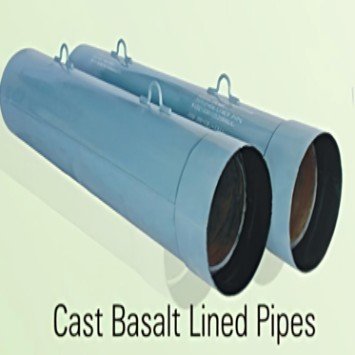
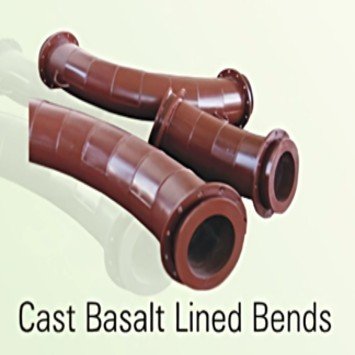
We are Manufacturer, Supplier, Exporter and Dealer of Cast Basalt, Cast Basalt Cylinder, Cast Basalt Tiles, Cast Basalt Bends, Cast Basalt Lined Pipes. Our setup is situated in We are Manufacturer, Supplier, Exporter and Dealer of Cast Basalt, Cast Basalt Cylinder, Cast Basalt Tiles, Cast Basalt Bends, Cast Basalt Lined Pipes. Our setup is situated in jamshedpur, jharkhand, India. India.
Cast Basalt is produced by melting of naturally available basalt rock and cast into tiles and cylinder. The casting is so produced is then subjected to heat treatment cycle to produce Re – crystallized basalt the resultant product is called as fused cast basalt which has excellent wear resistant properties against sliding and friction induced abrasion and also inherits the inertness of parent material.
1 .Introduction
Cast Basalt is a mineral of exceptionally high abrasion resistance, with unlimited resistance to moisture, high compressive strength, and resistance to virtually all acids and alkalis. It’s completely corrosion-free and reaches a hardness value of 8 (min) on the Moh’s hardness scale, comparable to diamonds.
Cast Basalt is produced by melting naturally available basalt rock and casting it into tiles and cylinders. The castings are then subjected to heat treatment cycles to produce re-crystallized basalt, resulting in fused Cast Basalt. This material has excellent wear-resistant properties against sliding and friction-induced abrasion and retains the inertness of the parent materials. Cast Basalt is manufactured in the form of pipe sections, tiles, cylinders, and trench liners.
2. Technologies Includes
Raw Material Processing – Crushed basalt rock as feedstock.
Melting & Casting – Electric/coal furnaces for melting; precision molds for pipes, bends, and fittings.
Annealing – Controlled cooling to improve toughness.
Machining & Finishing – Grinding ends, preparing joint faces.
Lining Techniques –
Monolithic cast basalt pipes (up to 1m length).
Steel pipes lined with basalt tiles/segments for larger diameters.
Joining Technologies –
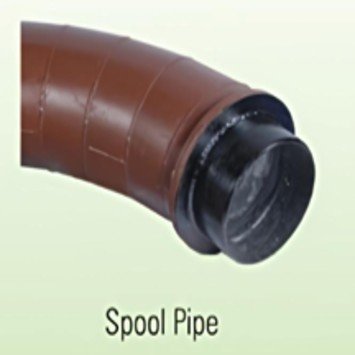
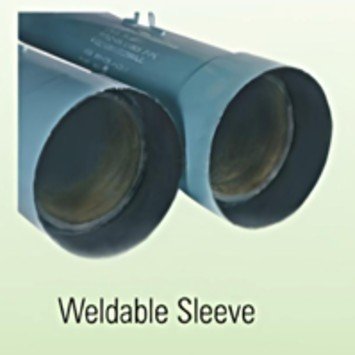
Welded steel shells.
Rubber/metallic couplings.
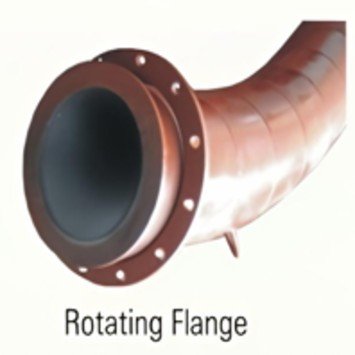
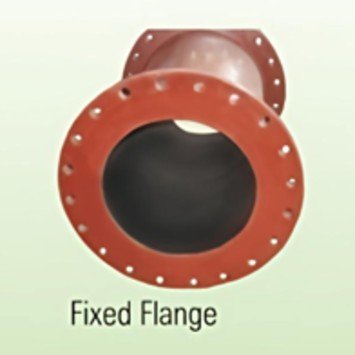
Flanged joints with gaskets.
3.Specification
• Nominal Bore: 32 to 600 mm
• Thickness Ranging: 20 to 30 mm
• Length: 500 mm
• Friction Resistance : As more material is passed over Cast Basalt it gets polished up thereby reducing friction further. Cast Basalt improves in service after getting polished. Wetting also improves its performance in practical applications.
• Impact Resistance : Direct Impact Resistance at 90 degree is low like all other ceramics, but it can be increased with proper installation by reducing the angle of impact. Cast Basalt is the best wherever sliding abrasion exists. Moreover, external impact strength of composite basalt pipe (enclosed in M.S. Shell) is always more than that of bare Ni-hard Pipe.
• Chemical Resistance : Cast Basalt is almost absolutely acid/alkali resistant (except Hydrofluoric Acid) and hence corrosion resistant.
• Weight and Sizes : Basalt Tiles are available in regular shape square of 200 x 200 x 30 mm thick, weighing approx. 90 kg/sq m; whereas bends and pipes are lined using Basalt Cylinders of various standard sizes from 50NB upto 500NB.
• Temperature : Cast Basalt withstands temperature up to 4500 C
4 .Technical Description
| Sr. No. | Particular | Specifications |
|---|---|---|
| 1. | Item | Cast Basalt |
| 2. | Chemical Resistance | Absolutely acid/alkali resistant (except Hydrofluoric Acid)and Hence corrosion resistant |
| 3. | SPECIFICATIONS OF CAST BASALT | |
| a. | Cast Basalt Thickness | 20 +– 2 mm thk |
| b. | Max. Operating temprature | 350 Deg. C |
| c. | Bulk Density | 2.9 to 3.1 gm/cc |
| d. | Water Absorption | Max. 0.5% |
| e. | Hardness to Mohs | 8 |
| f. | Compressive Strength | 500 – 550 Mpa |
| g. | Flexural Strength | 40-50 Mpa |
| h. | Coefficient of expansion | 6-8 * 10 -6 1/K |
| i. | Grout Thickness | Min. 15-20 mm |
5. Properties of Cast Basalt Pipes
High Abrasion Resistance: Cast Basalt pipes offer excellent protection against abrasion and scrubbing, making them ideal for applications involving harsh materials.
Corrosion-Resistant:→ Cast Basalt pipes are resistant to corrosion from acids, alkalis, and other chemicals.
High Compressive Strength: → Cast Basalt pipes have high compressive strength, ensuring they can withstand heavy loads and pressures.
Temperature Resistance: → Cast Basalt pipes can withstand temperatures up to 350°C or -40°C.
6. Applications of Cast Basalt Pipes
Cement Plants: → Cast Basalt pipes are used in cement plants for conveying abrasive materials like cement clinker.
Steel Plants: → Cast Basalt pipes are used in steel plants for handling materials like iron ore, coal, and limestone.
Chemical Plants: → Cast Basalt pipes are used in chemical plants for handling corrosive materials .
Thermal Power Stations: →Cast Basalt pipes are used in thermal power stations for ash handling and other abrasive applications. .
7. Benefits of Cast Basalt Pipes
Longer Equipment Life: → Cast Basalt pipes offer longer equipment life due to their high abrasion resistance and corrosion-resistant properties.
Reduced Maintenance: → Cast Basalt pipes require less maintenance compared to other materials, reducing downtime and increasing productivity.
Material Properties → Hardness 8–9 Mohs, compressive strength > 3000 kg/cm².
Cost-Effective:→ Cast Basalt pipes are a cost-effective solution for applications involving harsh materials.
8. Conclusion
Cast Basalt pipes are an excellent choice for applications involving harsh materials, offering high abrasion resistance, corrosion resistance, and high compressive strength. Their benefits include longer equipment life, reduced maintenance, and cost-effectiveness.
some featured products