Metal Casting Manufactures
TECHNOSERVICES is a professional supplier of castings in Jamshedpur, Jharkhand. We provide our clients perfect solution in metal industry. We focus on providing service and quality exceeding customer’s expectation, at highly competitive prices. Our processes include Sand Casting, Investment Casting, Die Casting, Lost Foam Casting, Centrifugal Casting and Permanent Casting. Today, its products are marketed globally through many countries.
Cast Basalt is produced by melting of naturally available basalt rock and cast into tiles and cylinder. The casting is so produced is then subjected to heat treatment cycle to produce Re – crystallized basalt the resultant product is called as fused cast basalt which has excellent wear resistant properties against sliding and friction induced abrasion and also inherits the inertness of parent material.
Introduction
Metal Casting is one of the oldest and most widely used manufacturing processes, where molten metal is poured into a mold cavity and solidified to obtain a desired shape.
It allows the production of complex shapes, large components, and near-net-shape products.
First practiced ~6000 years ago, it remains the backbone of automobile, aerospace, machinery, construction, and tool industries.
1. Sand Casting.
Sand casting is divided into many types: GREEN SAND CASTING, RESIN SAND CASTING AND SODIUM SILICATE BONDED SAND CASTING. Green sand casting is the lowest cost method to get a product, whose surface finish is not good too. Resin sand casting will get a good surface and precision dimensions, widely used in automobile industry.
2. Investment Casting.
As highly versatile casting process, Investment Casting has for some time been perceived as a comparatively expensive process. But when compared to alternative processes which require extensive welding or machining, an investment cast component can often dramatically reduce overall part production costs. Casting Quality Industrial would adapt three investment casting methods to reach our clients’ quality requirement: Water Glass (Colloidal Silica-sodium), Silica Sol technology or Colloidal Silica-sodium Silicate Compound. Water Glass technology is the worst quality but cheapest. Silica Sol technology is the best quality but most expensive. We will analysis the usage and drawings tolerance to choose an economic method.
3. Centrifugal Casting
Centrifugal Casting mainly produce the pipes or pipe figure products, such as ductile iron pipe, cast iron soil pipe, glass roller, Furnace Roller and radiant tubes.
4. Low Foam Casting.
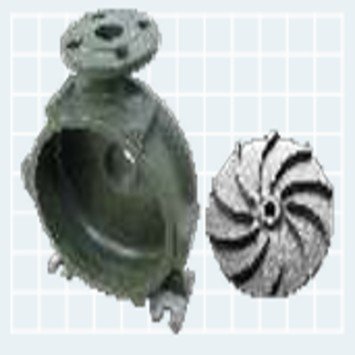
Lost-foam casting (LFC) is a type of evaporative -pattern casting process that is similar to investment casting except foam is used for the pattern instead of wax. This process takes advantage of the low boiling point of foam to simplify the investment casting process by removing the need to melt the wax out of the mould. Casting Quality Industrial only supply ductile iron or steel parts by lost foam casting method, such as valve body, impeller, pipe fittings, electrode and simply figure parts
5. Die Casting .
Die casting is a metal casting process that is characterized by forcing molten metal under high pressure into a mould cavity. Die Casting is generally use to make aluminium and zinc alloy parts.
6. Permanent Casting .
Permanent casting and low-pressure casting is used to make aluminium castings permanent casting can get a better surface and dimensions than sand castings, low pressure casting can get a stably structure which are suitable to endure pressure parts.
7. Lost-Foam Casting (LFC) .
Lost Foam Casting is a type of evaporative-pattern casting process that is similar to investment casting except foam is used for the pattern instead of wax. This process takes advantage of the low boiling point of foam to simplify the investment casting process by removing the need to melt the wax out of the mould. Casting Quality Industrial only supply ductile iron or steel parts
8. Site Parameters (Selection Criteria)
Metal Type → Steel, iron, aluminum, copper, magnesium.
Casting Size → Few grams (jewelry) to several tons (ship propellers).
Tolerance Required → Sand casting (low), investment casting (high).
Production Volume → Sand (low cost, low qty), die casting (high volume).
Cooling Conditions → Affect grain structure & properties.
Infrastructure → Foundry space, furnaces, ventilation
9.Quality Control
* Raw Material Control * Chemistry Spectrum Analysis * Mechanical Property * Metallographic Analysis * Ultrasonic Testing * Magnetic Testing * Radiographic Testing * Dimension Inspection * Visual Inspection * Dimension Checking * Chemical Analysis * Penetrant Testing * Leak Testing * Hardness Test *
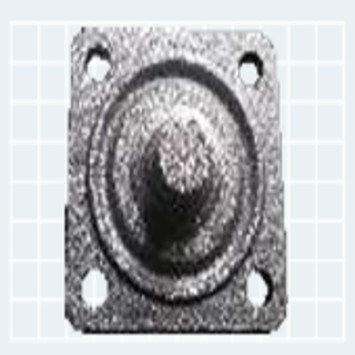
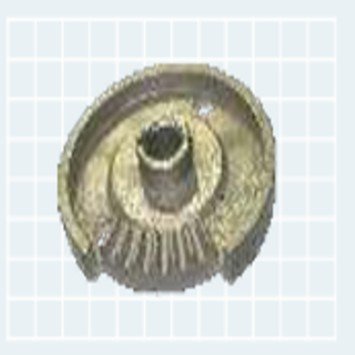
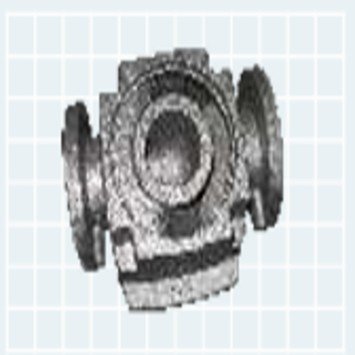
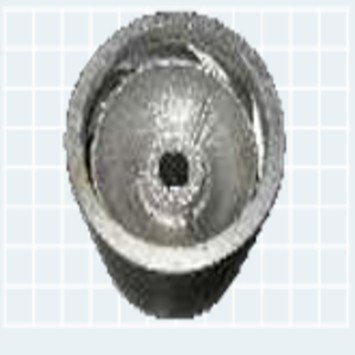
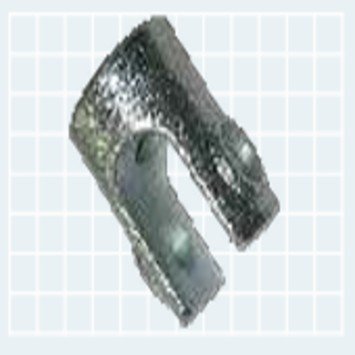
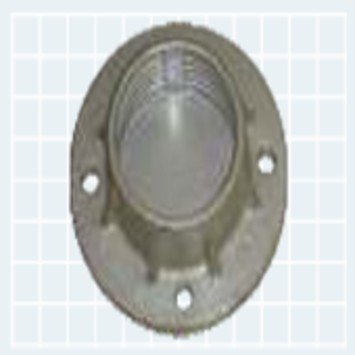
some featured products